AVBC Success Story

01
AVBC Annual Workshop 2026 · Benin, 8 to 10 September

Record turnout in Benin as AVBC holds its biggest workshop yet

More companies, more countries and the first hybrids bring African vegetable breeding a step closer to farmers.

The Africa Vegetable Breeding Consortium (AVBC) staged its largest annual workshop to date in Benin, with more attendees and more countries than ever before. The new breeding lines and hybrids on display could help widen climate-resilient, market-driven vegetable production across Africa and further afield.

02
Benin 2026

The widest turnout since 2018

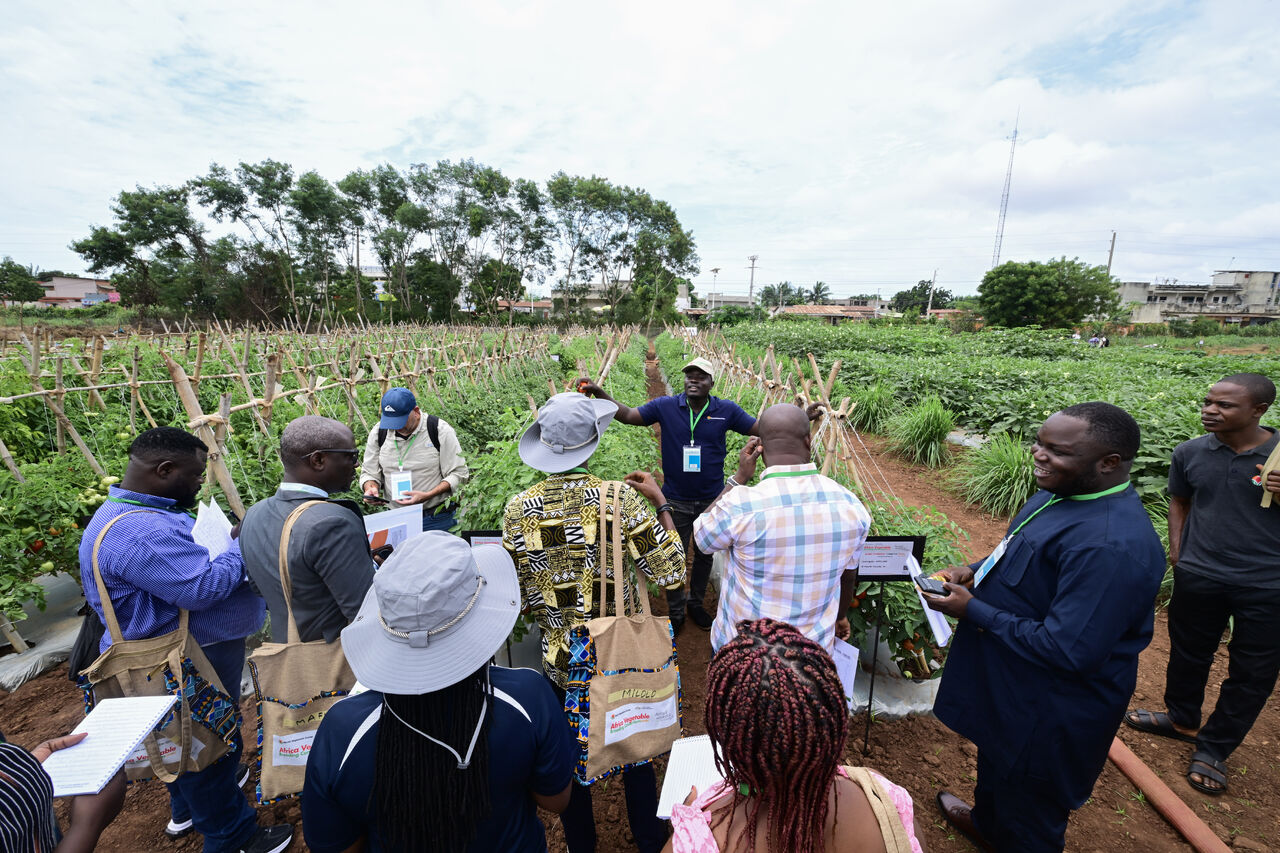
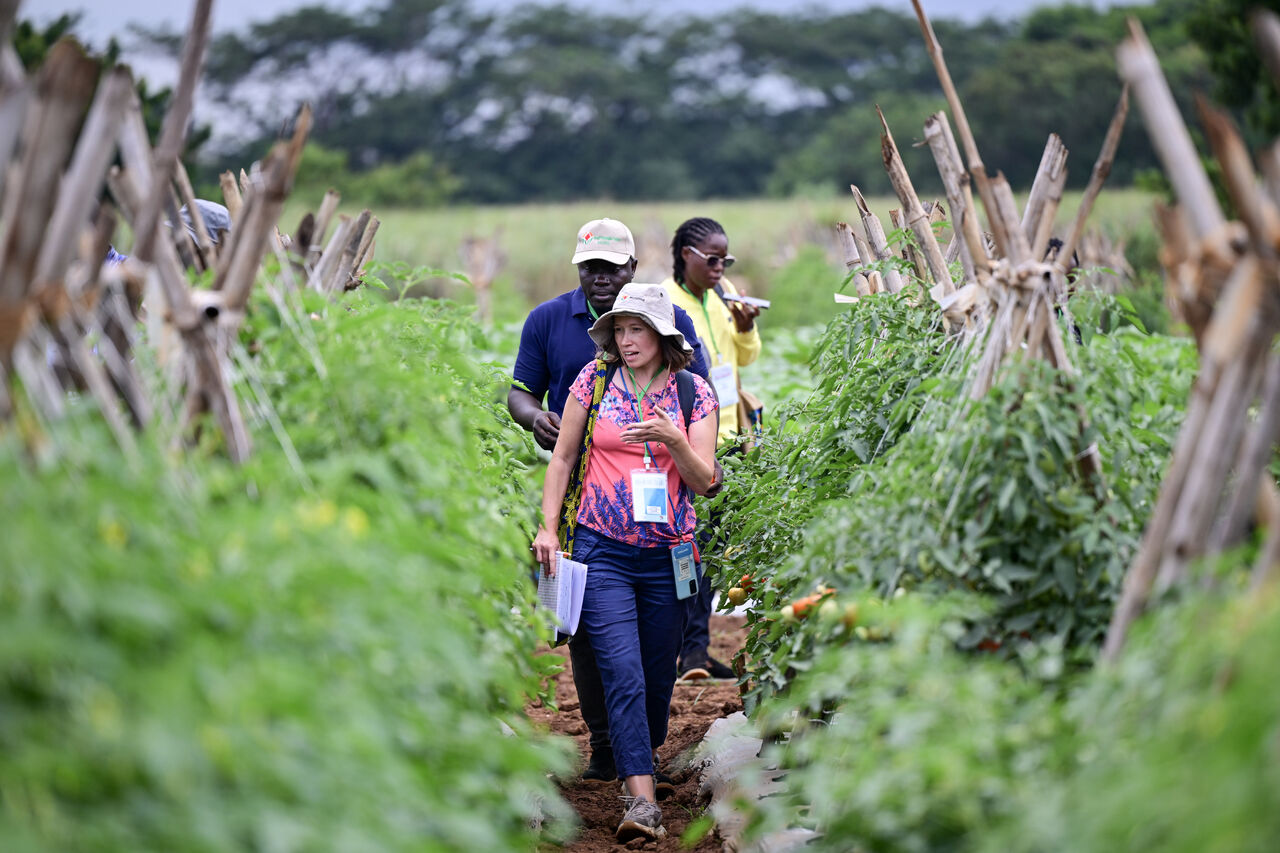
The WorldVeg West Africa Regional Office hosted the event. Attendees travelled from places including DR Congo, France, Italy, South Africa and Tanzania, making this the most geographically diverse gathering since the consortium launched in 2018.

In the field

Participants assessed 41 breeding lines

41 lines
Tomato Chili pepper Habanero pepper Okra Pumpkin Amaranth Mungbean African eggplant

Each of these crops matters for nutrition and income across the continent, and each has real room to grow commercially. Yet many farmers struggle to find good seed of resilient varieties that deliver solid yields and quality fruit, cope with tough growing conditions and suit what local markets want.

03
The AVBC model

What AVBC does about it

First, exclusive access

Improved, locally adapted varieties for African seed companies

AVBC channels improved, locally adapted varieties and hybrids to African seed companies, and through them to farmers. Members receive first, exclusive access to WorldVeg-improved breeding lines and hybrids. They can draw on this material to build up their own breeding work and create new varieties and hybrids for commercial release.

01

Yearly workshops

At the yearly workshops, members watch the materials perform in the field, talk with WorldVeg breeders and fellow seed companies, share strategies and plan joint work.

02

Trials across Africa

WorldVeg's network of scientists and research sites in several African countries allows breeding material and hybrids to be trialled in different agroecological settings.

03

Across language barriers

The Center's English-speaking and French-speaking teams help companies collaborate despite the language barriers that often separate seed businesses in different regions.

04

A joint initiative

AVBC is run jointly by WorldVeg and the African Seed Trade Association (AfSTA).

WorldVeg

Mwasilwa Ambali, Lead Technology Scaling Specialist

Described the event as the largest and most varied AVBC workshop so far, and said the turnout shows seed companies are keen for better vegetable genetics. He explained that the goal is for African companies to access these technologies, trial the materials in their own conditions, strengthen their breeding capacity and eventually deliver improved varieties to farmers. In his view, the more companies able to develop and sell competitive products of their own, the stronger and more varied Africa's vegetable seed sector will be.

AfSTA

Dr. Yacouba Diallo, Secretary General of AfSTA

Pointed to the wider choice on offer this year, from promising breeding lines through to hybrids. He noted that exclusive early access lets AVBC members start sooner in spotting the varieties and products best suited to their farmers and markets.

04
A first for AVBC

Hybrids make their debut

For the first time, AVBC demonstration plots featured hybrids. WorldVeg developed all 30 of them: 16 tomato types and 14 pepper types (11 chili and 3 habanero).

A breeding line can be released as an open-pollinated variety (OPV), where farmers are free to keep seed and sow it again. A hybrid, by contrast, comes from crossing two carefully chosen parent lines. The first-generation plants can inherit strong traits from both parents and outperform them, a phenomenon called hybrid vigour, or heterosis. In practice that can translate into higher yields, more even crops and better resilience.

Those benefits generally do not carry over when farmers replant seed saved from a hybrid crop, so they purchase fresh hybrid seed for each planting. For seed companies this opens a stronger commercial opportunity, which is why hybrids are a significant addition to the AVBC portfolio.

05
Special Project

Making headway against bacterial wilt

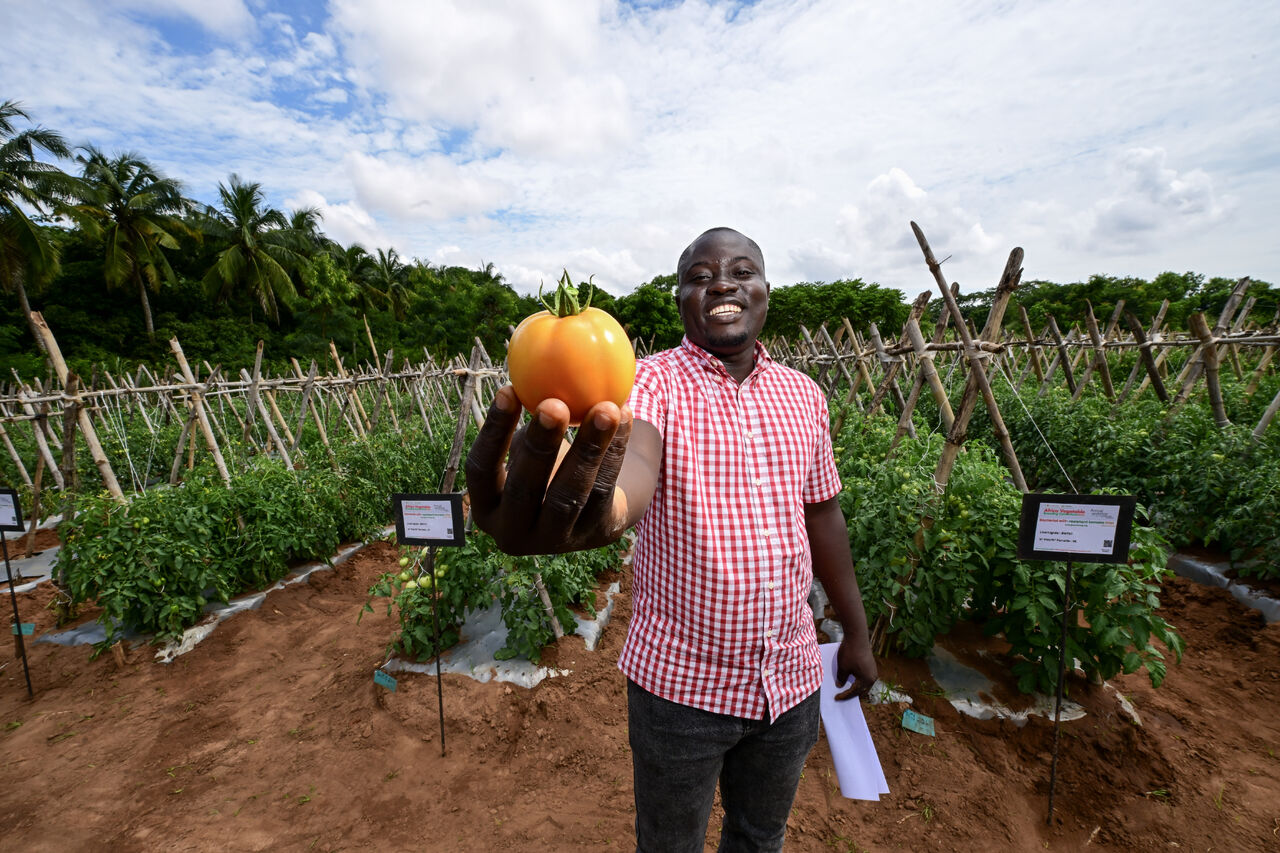
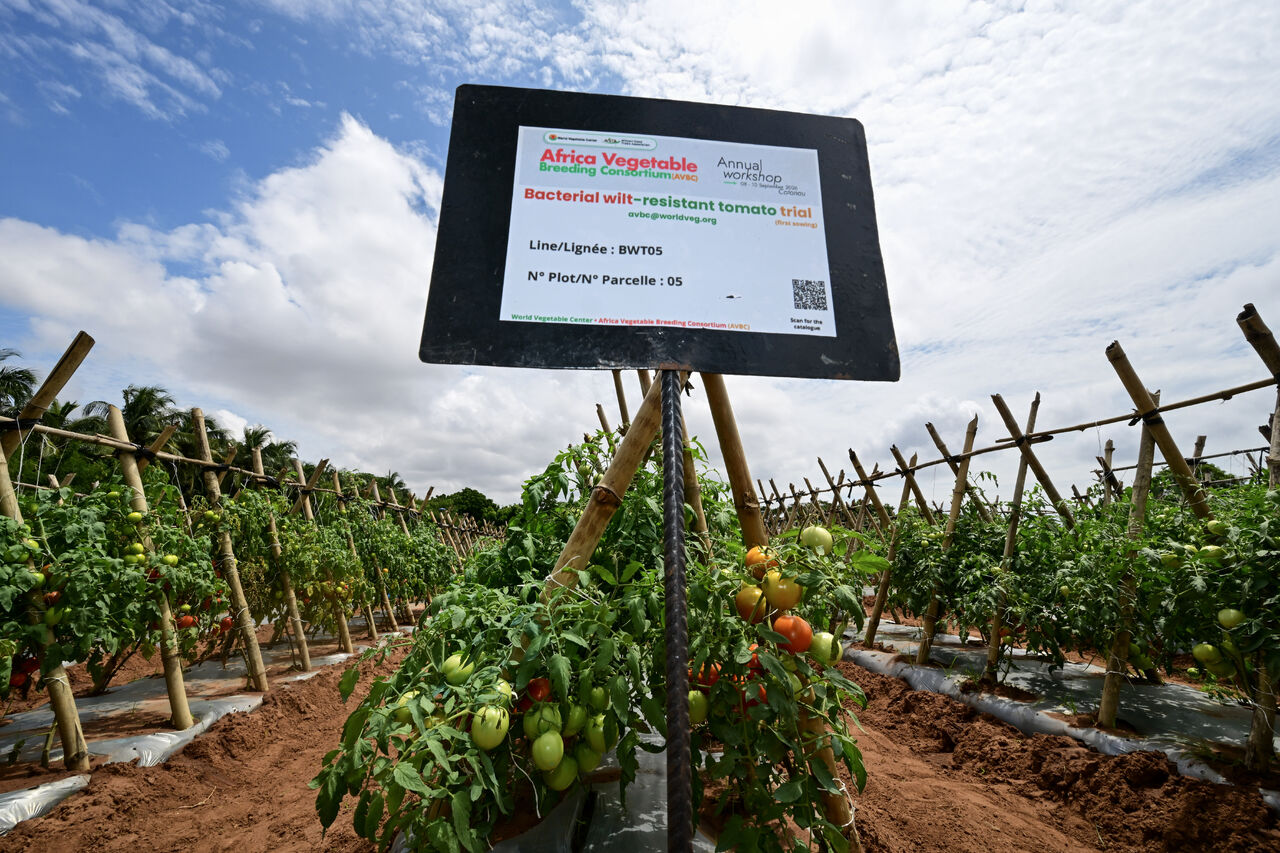
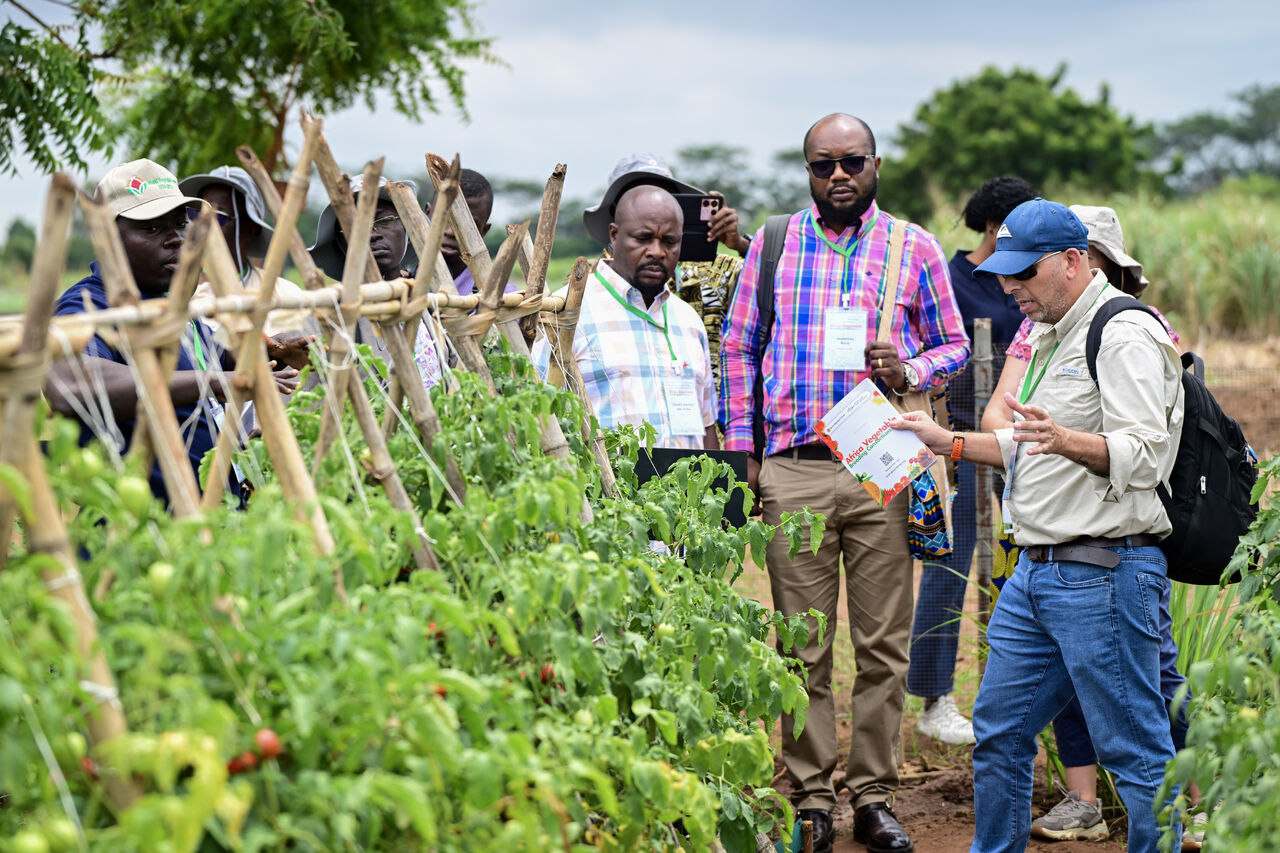
Visitors toured plots belonging to an AVBC-exclusive Special Project that features tomato and pepper lines able to resist bacterial wilt, one of the toughest diseases these crops face in Africa.

4 years

Fee-based, with six seed companies

This four-year project is fee-based, and WorldVeg runs it with six African seed companies.

12 + 15

Lines tested at wilt hotspots

Together they are testing 12 tomato lines and 15 chili pepper lines at bacterial wilt hotspots across the continent.

Gene pyramiding

Stacked resistance genes

The tomato lines stack several resistance genes in varying combinations, a method known as gene pyramiding.

Early findings

Which resistance works best, and where

Bacterial samples collected at every trial site are sent to WorldVeg for identification. Matching the performance of each gene combination to the bacteria found at each location should reveal which resistance works best in which place, and give the participating companies an early advantage in building locally adapted varieties that resist the disease.

Early findings from both controlled inoculation tests and the Benin field trial show clear differences in resistance levels. This underlines why pyramiding resistance genes is important when facing varied bacterial strains.

06
Awards

Members honoured

AVBC gave awards in two categories.

Award

Getting AVBC varieties to market

COPROSEM (Mali) and BOUTAPA (Burkina Faso) were recognized for their active involvement and for releasing over 10 varieties, among them mungbean, pepper and tomato.

COPROSEM (Mali) BOUTAPA (Burkina Faso)
Award

Reliable data sharing

COPROSEM, BOUTAPA, East-West Seed and NAFASO Seeds were recognized for regularly reporting on the use and seed sales of WorldVeg breeding lines or the varieties derived from them. Such data is vital for gauging AVBC's impact, proving that the model works and justifying ongoing investment and support.

COPROSEM BOUTAPA East-West Seed NAFASO Seeds
07
On the demonstration plots

Crop-by-crop highlights

Pepper
  • The AVBC-exclusive chili lines cover important sub-Saharan market types, including dual-purpose lines for fresh and dried sale, with the fruit shape, size, color and strong capsaicinoid content that different regional markets look for.
  • They also performed well agronomically, with high fruit set and yield in hot conditions, good plant vigour, and resistance to cucumber mosaic virus and bacterial wilt.
  • The habanero hybrids delivered outstanding results.
  • The breeding team is particularly enthusiastic about the exclusive open-pollinated habaneros released this year, above all AVPP25027, WorldVeg's first high-performing, highly pungent yellow habanero.
Tomato
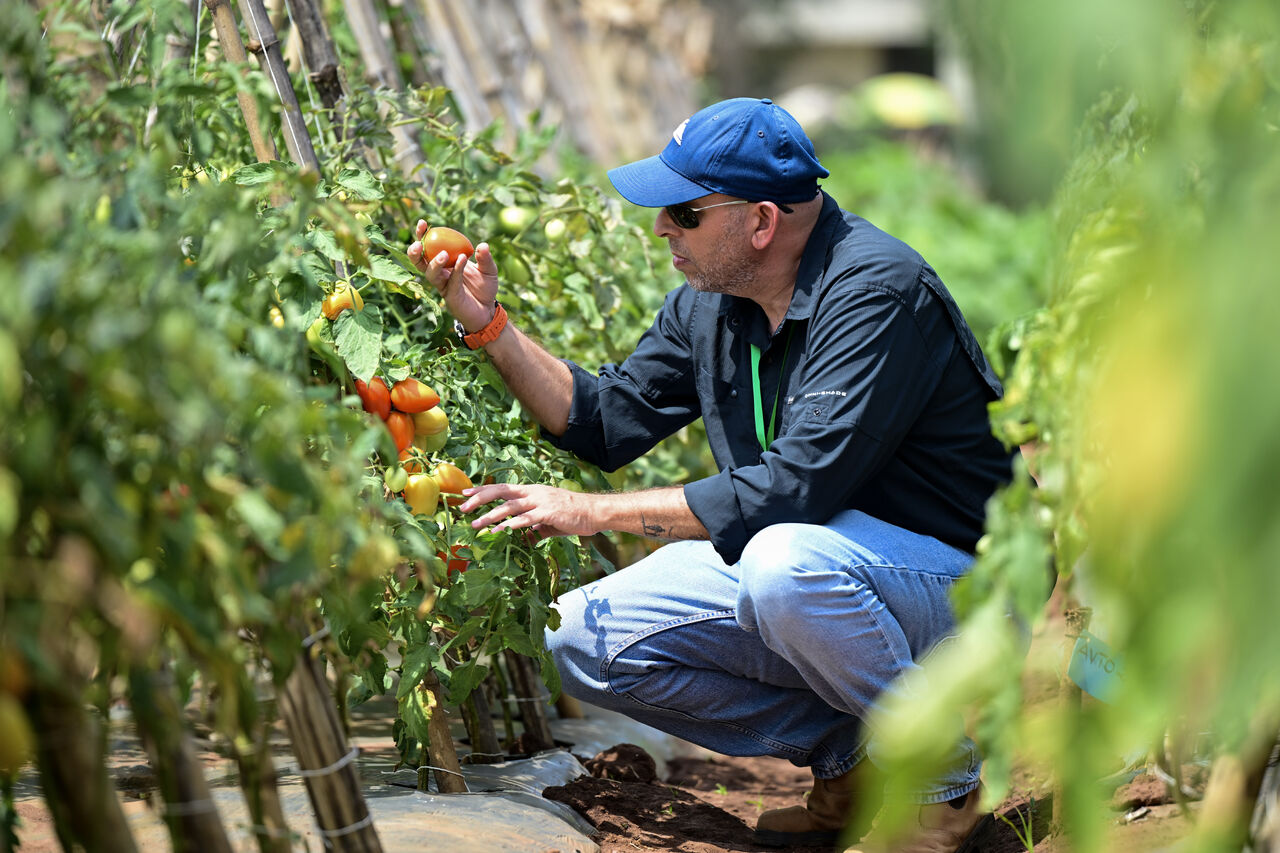
  • The 10 new AVBC-exclusive lines did well in Benin's fields, pairing fruit types that markets prefer with important disease resistance traits.
  • The 16 experimental hybrids offer partners advanced, market-focused material to evaluate and possibly commercialize.
  • The bacterial wilt project showcased 12 lines carrying different combinations of resistance genes in hotspots across Africa.
Okra
  • Six exclusive lines span three priority market segments (long, medium and short pod). All combine excellent fruit quality (mucilage content, no spines, green to dark green color, fruit length) with short internodes, high yield and resistance to okra leaf curl disease.
  • The medium-pod lines AVOK2602, AVOK2605 and AVOK2606, plus the short-pod line AVOK2604, were bred to fill a gap in the portfolios of companies serving West and Central Africa.
  • Discussions with seed companies were particularly useful and raised the prospect of joint work on how the lines react to virus strains in various hotspots.
Mungbean
  • Four large-seeded lines (100-seed weight of 7 to 7.9 g) with glossy green seed, early maturity (under 60 days) and high yield (1.4 to 1.5 t/ha), developed in response to input from previous workshops.
  • Their performance in Benin was excellent, and participating companies showed keen interest in trialling them.
  • Following talks with private companies, new mungbean varieties are expected to be released in Benin, Burkina Faso and Somalia in early 2027.
  • WorldVeg also handed interested companies Mung Delights, its e-recipe book on mungbean, available in English, French and Swahili.
Pumpkin
  • Six elite lines (two butternut, two Thai warty, one smooth dark-green ribbed and one mottled light-green) resist viruses, powdery mildew and downy mildew, and have very good to excellent fruit quality that fits major African market preferences.
  • AVPU1426 attracted strong interest. It resists Tomato leaf curl New Delhi virus (ToLCNDV) and Squash leaf curl China virus (SLCCNV), and it yielded very well in the Benin demonstration.
  • The materials showed good to strong field resistance to the local powdery mildew strain at 77 days after direct sowing. No significant virus pressure was recorded.
  • Companies were drawn to multipurpose pumpkins that serve for flesh, seeds and young leaves. AVPU2185 looked especially promising for all three uses, while butternut types won the most market interest because of their niche value.
  • Companies in several African locations want to trial WorldVeg's pumpkin hybrids, and some also asked about exploiting hybrid breeding and about training in controlled pollination.
Amaranth
  • Five breeding lines were shown: three aimed at the vegetable market and two at the emergency grain or dual-purpose market, to help tackle deficiencies in iron, zinc, calcium, vitamins and protein.
  • Talks with seed companies showed that West African markets mostly prefer green, broad-leaf types, as seen in lines AVAM2417 and AVAM2304.
  • Grain is still a new market in West Africa, although many companies are keen to promote it as a nutritious, healthy food.
  • One of the companies' firmest suggestions was to profile the nutrients in every line, which would make it easier to enter the market.
  • More than 10 companies asked to obtain the five lines on show, including the three narrow-leaf purple lines for the vegetable market.
African eggplant
  • Five breeding lines with strong bacterial wilt resistance were presented, tackling a widespread problem for the crop in Africa.
  • Three of them (AVAE2505, AVAE2504 and AVAE2509) beat a commercial check for fruit yield and attracted high interest from most companies.
  • Companies asked for more kumba-type lines to suit West African preferences. The five lines shown are gilo types, which are favored mainly in East Africa and some West African markets.
  • Most companies also want to develop African eggplant hybrids.
08
What's next

Looking ahead

Record attendance, the arrival of hybrids and more focused breeding projects show AVBC building momentum as Africa's vegetable seed sector expands.

The purpose has not changed: to give more seed companies the genetics and breeding tools to develop competitive varieties in and for Africa, and to speed up the delivery of quality seed to farmers.

AVBC draws on the APSA-WorldVeg Vegetable Breeding Consortium in Asia, which has led to the release of 200 new climate-smart vegetable varieties and is on track to reach one million smallholder farmers by 2030.

Become an AVBC member

Transform vegetable-breeding innovation into commercial success

Join AVBC to access elite genetics, technical expertise and collaborative opportunities designed for Africa’s vegetable seed sector.

Membership Application